
SURAH FUSSILAT (“EXPLAINED IN DETAIL”): AYAT 39 (QURAN 41:39)
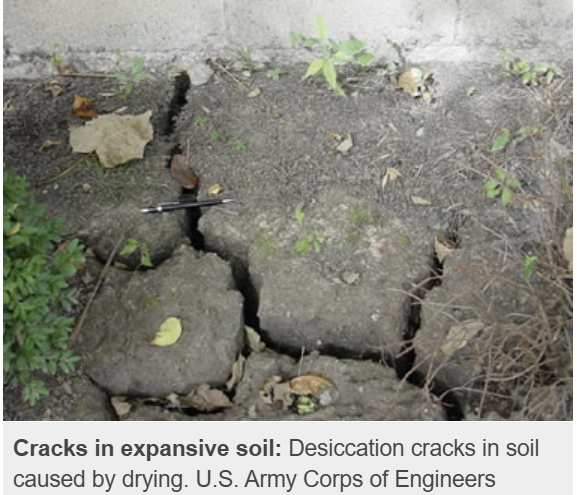
When rain falls upon dry land, a quiet transformation unfolds beneath our feet. What appears inert and lifeless suddenly stirs, rises, and expands. Modern geology explains this phenomenon through the behavior of expansive soils/clay, particularly those rich in smectite clays, which absorb water and increase in volume—sometimes by more than ten percent. According to the U.S. Geological Survey, these clays swell as water molecules enter their layered structure, causing the soil to lift and exert pressure on anything resting above it, from roads to building foundations. This swelling–shrinking cycle is responsible for billions of dollars in structural damage annually, making expansive soils one of the most significant geotechnical hazards in the world.
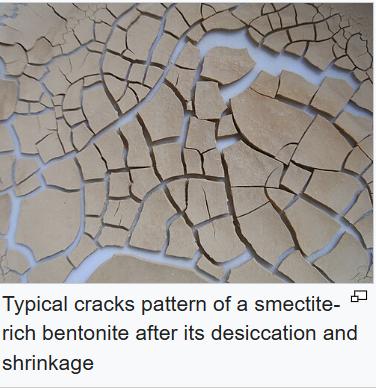
A clear explanation of this process is provided in geological references such as Geology.com, which notes that expansive soils “increase in volume when they absorb water” and that this swelling is directly responsible for phenomena like pavement heaving and pothole formation (Geology.com – Expansive Soils). When water is withheld, the same soil contracts, leaving behind cracks and depressions. The earth, in a very literal sense, quivers and swells with the arrival of water.
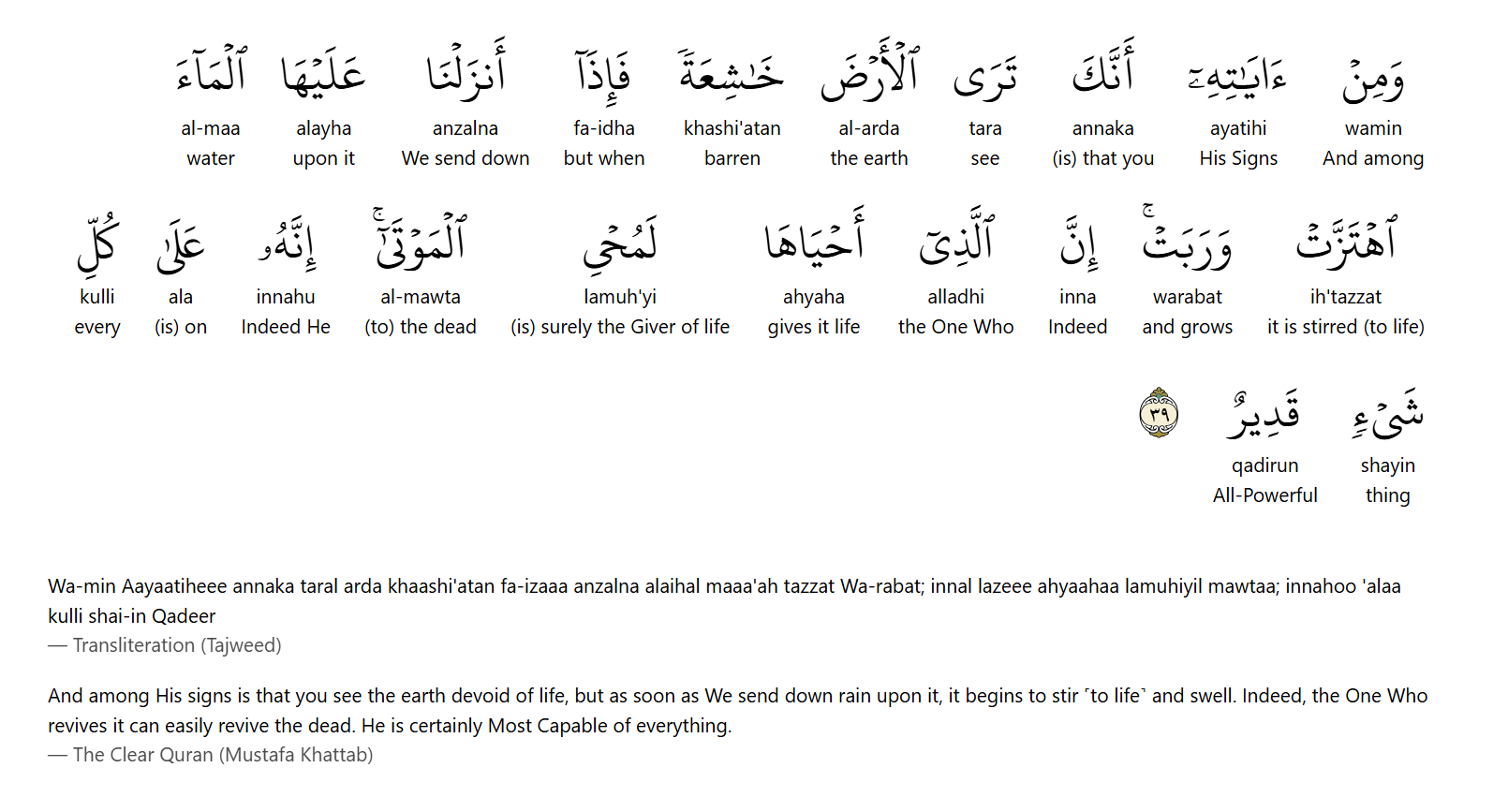
This scientific reality resonates strikingly with the Qur’anic description revealed more than fourteen centuries ago. In Surah Fussilat 41:39, the Qur’an states:
“And among His signs is that you see the earth still and lifeless, but when We send down water upon it, it stirs and swells…”
(Quran.com – 41:39)
Classical exegetes such as Ibn Kathir describe this verse as a reference to the earth’s visible revival—its trembling, rising, and producing vegetation once rain descends (Tafsir Ibn Kathir). The Arabic verbs اهتزّت (ihtazzat, “it quivered”) and رَبَت (rabat, “it swelled”) capture both the motion and expansion of soil as it absorbs water. Modern soil science now uses the same conceptual language—heaving, swelling, expansion—to describe the behavior of clay-rich earth under rainfall.
The verse concludes by drawing a profound analogy: the One who revives dead land through water is fully capable of reviving the dead. The Qur’an thus transforms a geophysical process into a theological sign—an interplay between the observable and the metaphysical. The swelling of soil becomes not merely a natural event but a reminder of renewal, resurrection, and divine power.
In this convergence of revelation and scientific observation, the earth’s subtle movements after rainfall stand as both a physical reality and a spiritual metaphor. The swelling ground beneath our feet becomes a quiet testimony—one that geology measures, and the Qur’an elevates into meaning.