
SURAH YA-SIN:AYAT 36 (QURAN 36:36)

This concise yet profound verse from Surah Ya-Sin draws attention to a recurring structure in creation: pairing. Classical Qur’anic exegesis explains the Arabic term azwāj as encompassing not only male and female, but also complementary categories, contrasting properties, and unknown forms of creation, a meaning explored in depth within traditional tafsir such as Maarif-ul-Qur’an available at Quran.com.
Modern scientific discovery repeatedly reveals pair-based structures and dualities embedded in nature, inviting thoughtful reflection on the verse’s expansive language.
Biological Pairing: Life Through Complementarity
In biology, pairing is most visible in sexual reproduction, where male and female gametes unite to initiate life. This principle applies broadly across animals and flowering plants, whose reproductive systems were fully understood only after the development of microscopy. Modern botany confirms that plants possess distinct male (stamen) and female (pistil) structures, a reality documented in contemporary biological science.
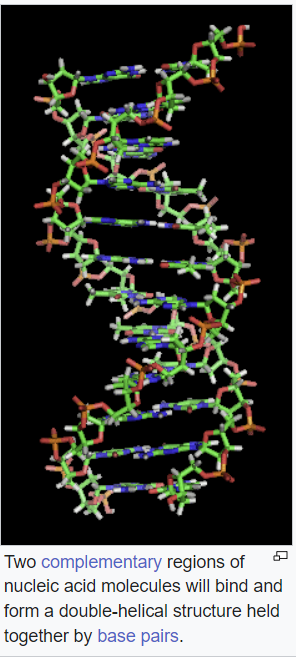
At a deeper level, genetic information itself is paired. The structure of DNA consists of a double helix, two complementary strands bound by specific base pairs (adenine–thymine and cytosine–guanine). This pairing mechanism, foundational to heredity and cellular replication, is a cornerstone of modern genetics as described in standard scientific texts. The discovery of DNA’s double-helical structure in the 1950s (discovered in 1953 by Watson and Crick (using Rosalind Franklin’s X-ray data) was perhaps the most significant biological accomplishment of the 20th century. Knowledge of this remarkably clever structure, involving two complementary strands of DNA that each provide the template for making the other strand, provided a key insight about how it was that DNA could serve as the information molecule of all living systems. This structural detail about DNA rapidly accelerated research that revealed important aspects about DNA function encodes information for creating and operating living systems. Meanwhile, DNA’s double helix has arguably become the most well-known and iconic image associated with biology, perhaps with all of science.
Chemical Pairing: Charges, Bonds, and Stability
At the atomic scale, matter is governed by opposing electrical charges. J.J. Thomson discovered that atoms contain charged particles (electrons) in 1897, while Robert Millikan later measured the precise charge of the electron (1909–1910). Benjamin Franklin discovered the concept of positive and negative charges in the 18th century, and Michael Faraday first identified the discrete nature of electric charge.
Every atom consists of positively charged protons and negatively charged electrons whose attraction creates stability. When atoms combine, chemical bonds form through charge interactions, often resulting in polar structures known as dipoles, a concept clearly explained in modern chemistry resources such as ScienceABC.
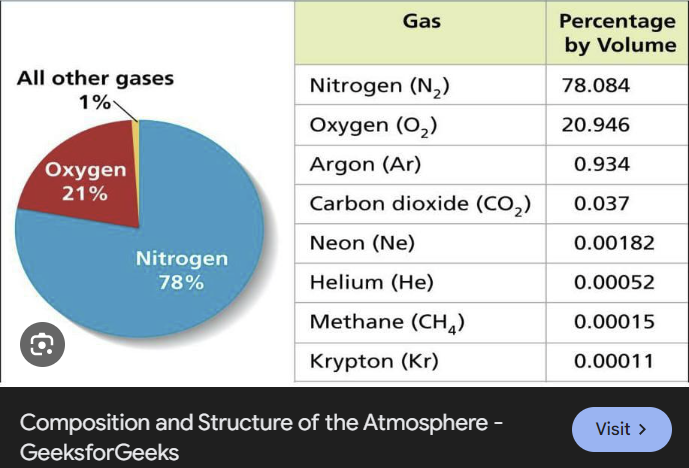
Some of the most essential elements in nature exist naturally as paired atoms. Oxygen (O₂) and Nitrogen (N₂), which together make up nearly all of Earth’s atmosphere, are examples of diatomic molecules—stable only in paired form, as detailed in educational science explanations like those from HowStuffWorks.
Fundamental Physics: Matter and Its Counterpart
Perhaps the most striking example of pairing in modern science is the discovery of antimatter. In the early 20th century, physicist Paul Dirac predicted that every particle of matter should have a corresponding antiparticle with opposite charge. This prediction was later confirmed experimentally with the discovery of the positron, a development now foundational to particle physics and summarized in resources such as Wikipedia’s overview of antiparticles.
Today, the Standard Model of particle physics, maintained and explained by institutions like CERN, organizes elementary particles into families and counterparts, revealing a universe structured by symmetry, balance, and relational pairing at the most fundamental level.
Cosmic and Conceptual Dualities
Beyond particles and molecules, science consistently relies on paired principles to describe reality: north and south magnetic poles, action and reaction, wave and particle behavior, energy and entropy. Even cosmology wrestles with the asymmetry between matter and antimatter following the Big Bang, a problem discussed in authoritative scientific analyses such as those published by the National Academies of Sciences.
These dualities do not imply that everything exists as identical halves, but rather that relationship, contrast, and complementarity are essential to existence itself.
Reflection: “And of That Which They Do Not Know”
What makes Qur’an 36:36 especially compelling is its closing phrase: “and of that which they do not know.” This language resists limitation, acknowledging realms of pairing beyond human awareness at any given time. As scientific knowledge expands—from cellular biology to quantum physics—it continues to uncover structures that resonate with this open-ended statement.
In this sense, the verse does not close inquiry; it invites it. The pattern of pairs, evident across disciplines, serves as a reminder that creation is intelligible, ordered, and layered with meaning—some known, and much yet to be discovered!